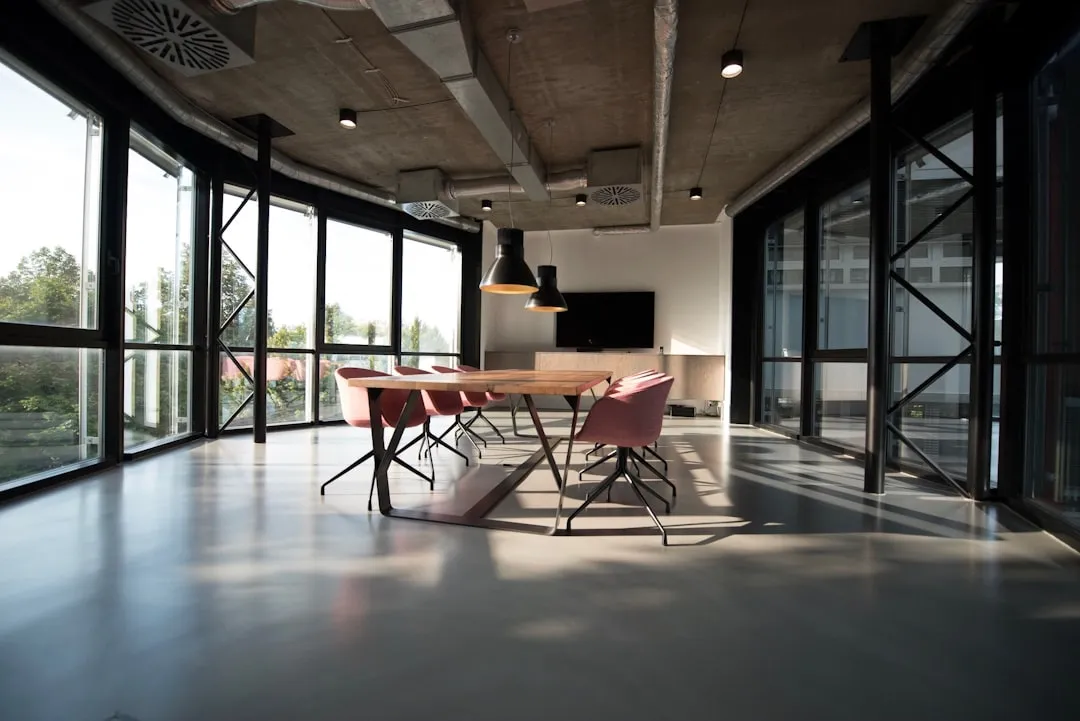
There's a hall west of Cardiff that was built as an empty shell, on purpose. I haven't stopped thinking about it since Monday.
It belongs to Renishaw, and The Manufacturer reported this week that the engineering technologies firm has finished the first phase of a £70m expansion at its Miskin site.
Hall 3 is complete, and Hall 4 was put up as a shell so it could be fitted out as demand grows. And part of it will start filling in the coming months, because demand for position encoders is strong. Behind that demand, the report points to the growing adoption of AI.
The scale is the bit that stuck with me.
According to the same report, the site opened with about 25 people and now employs roughly 950. There are 134 CNC machine tools on the floor, turning out around a million parts a month, and about £150m has been spent on the place so far. The land was bought from Bosch about fifteen years ago, which makes this a bit of an anniversary present.
Somebody had to manage all of those extra people.
What an unfilled hall tells you
I've spent a lot of years on the phone with plant managers and operations directors, and an unfilled hall is a sight they know well. It means the money's been spent, the roof is on, and the hard part hasn't started yet.
Machines can be ordered. Floor space can be poured. But a production manager who has run a shift pattern of that size before is a different sort of purchase altogether. Most of the announcement is about floor space, which stands at 617,000 square feet now and heads for 880,000 once Hall 4 is operational, per The Manufacturer.
There's a wellbeing centre with a restaurant and a fitness suite too, plus a 2km walking route round the perimeter (I only mention that because I can't think of another factory that has one). What the announcement doesn't cover is who'll run the extra space.
How does a site grow from 25 people to 950?
A site grows that fast by adding layers of management as well as machines. Every new hall needs people who can run shifts, keep quality records straight and chase suppliers, and those people sit a level or two above the operators. The Manufacturer's report doesn't say how Renishaw staffed Miskin, so I won't guess. But the headcount alone tells you the management bench had to grow in step.
It's easy to forget that when you read an expansion story.
And the machinery gets the photographs.
Why build a hall before you need it?
Because demand doesn't turn up on the day the builders finish. Renishaw put Hall 4 up as a shell so it could be fitted out in stages, and it's now bringing part of it into use because of strong demand for position encoders, according to The Manufacturer. Building ahead like that makes sense on the property side. It leaves the people side exposed.
Where does the lead time really sit?
A machine supplier will quote you a delivery date to the week. Managers, though, can't be quoted at all.
If you're hiring an operations manager in manufacturing, the clock starts well before the new line is switched on. The good ones are rarely sitting idle. Most are in post, with a notice period of a few months and a counter-offer waiting at the door.
Add a couple of interview rounds and an offer negotiation and you can be half a year or more from the first conversation to a manager who knows where the fire exits are.
And that's before you've found out whether the person you wanted can run a site that's still growing.
Plenty of capable managers are brilliant at keeping a settled plant ticking over and uncomfortable in a half-built one. Others are the reverse. Neither is wrong, but they're different jobs, and a spec written for one will quietly attract the other.
Who runs the new hall once the machines arrive?
Ideally someone who's been in the building for weeks before the first part is cut.
A new hall needs a production lead who can sign off the layout, a quality manager who can write the inspection plan, and a maintenance manager who knows what the machines will want on day one. Those roles can't be squeezed into the last month without somebody making compromises they'll regret.
Sometimes a stopgap is the sensible move. An interim manager can hold a hall together for a few months while the permanent hire works out a notice period, and the good ones leave the place tidier than they found it. But an interim brief needs writing as carefully as a permanent one, or you end up with a very capable person solving the wrong problem.
Then there's the candidate's side of the table. A manager weighing a move to a growing site wants to know the hall will really fill, who they report to, and whether the budget for a second shift is real. Vague answers lose them. And the strongest people tend to have the most options.
What can a smaller site take from Miskin?
Most sites aren't adding anything like that much floor space.
But the shape is the same at any size. Space and machines arrive first, and the managers get hired in a rush afterwards. A firm adding one line or one extra shift has the same sequence in miniature.
One habit that helps is to put the management hire on the same plan as the equipment order. Same board paper, same start date, same owner.
It sounds almost too simple to say out loud, which may be why it gets skipped.
Hall 4 will fill up in the end, and the machines will do what machines do. That part is the easy bit. Whether it fills smoothly will come down to who got hired while it was still empty.
If you've a hall, a line or a shift pattern on the way, our engineering recruitment team is always happy to talk through the management hires that should come with it.